Difference Between Antivirus and Firewall – A Complete, Practical Guide. If you’ve ever installed internet security software and wondered whether antivirus alone is enough, you’re not alone. Many users mix up antivirus and firewall, assuming they do the same job. They don’t. Understanding the Difference Between Antivirus and Firewall is one of the most important steps toward strong system and network security.
In today’s world of constant cyber risks, relying on guesswork is dangerous. Hackers don’t guess. They exploit gaps. This article explains the real-world antivirus vs firewall comparison, how each works, and why both are essential cybersecurity protection methods for protecting computers from hackers and malware.
Understanding the Core Purpose of Cybersecurity Tools
Before diving into the Difference Between Antivirus and Firewall, it helps to understand the bigger picture. Modern threats aren’t just viruses anymore. They include ransomware, phishing attacks, spyware, botnets, and unauthorized network access.
This is where digital security solutions come in. Some tools protect individual devices, while others guard the entire network. That’s the foundation of network security vs endpoint security, and it’s exactly where antivirus and firewalls differ.
What Does Antivirus Software Do?
So, what does antivirus software do exactly?
Antivirus is a type of malware protection software designed to protect individual devices like laptops, desktops, and smartphones. It scans files, applications, downloads, and even email attachments for malicious code.
Modern antivirus tools are far more advanced than older versions. They don’t just scan once and forget.
Key Features of Antivirus Software
- Antivirus real-time protection that monitors files as you open them
- Detection and removal of viruses, trojans, spyware, and ransomware
- Behavioral analysis to catch unknown threats
- Cloud-based threat intelligence updates
Whether you’re using antivirus for Windows and Mac, the core function remains the same: stopping malicious software after it reaches your system.
In simple terms, antivirus focuses on endpoint protection solutions, guarding the device itself rather than the entire network.
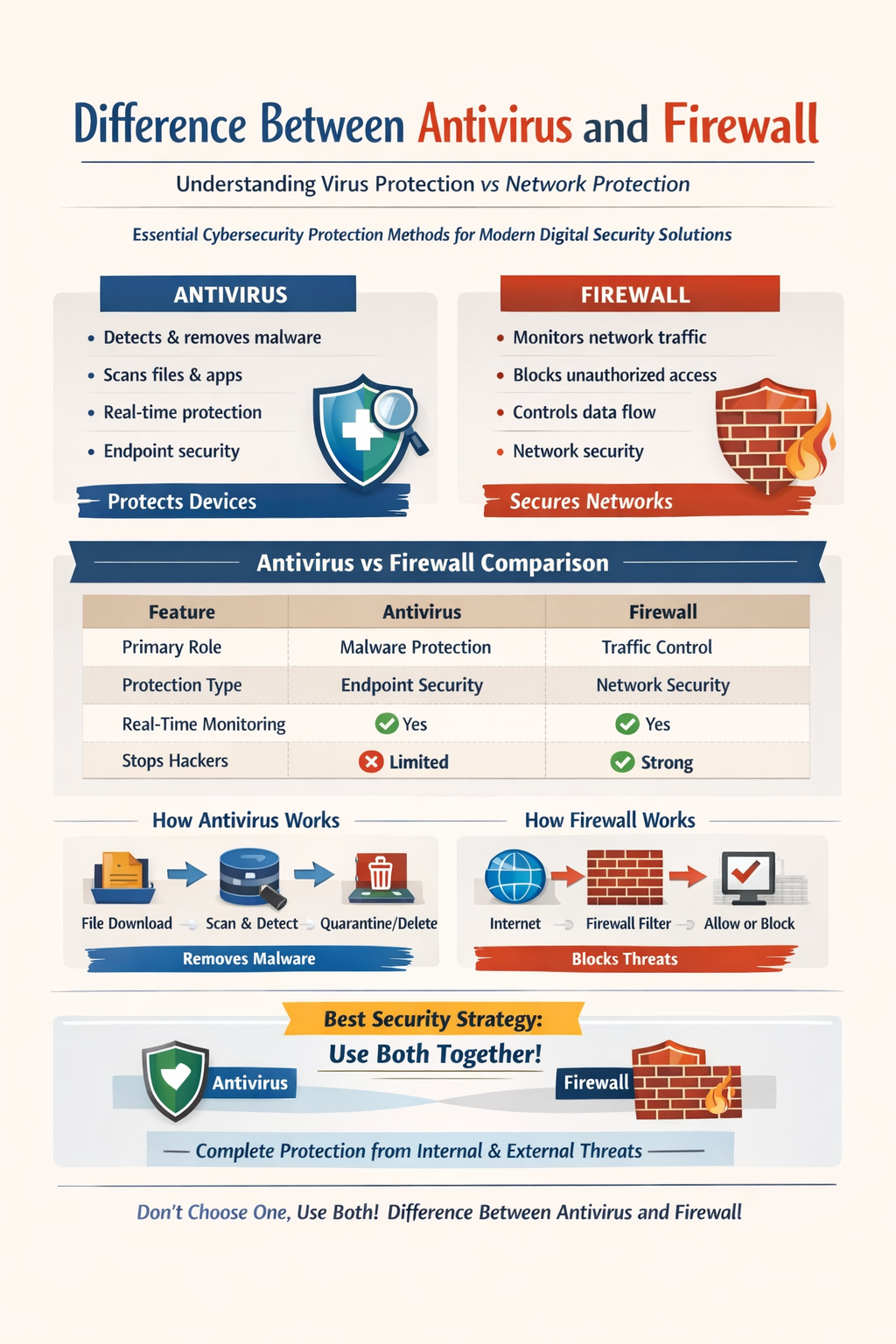
Firewall Protection Explained (In Simple Terms)
Now let’s switch gears. Firewall protection explained properly means understanding traffic control.
A firewall acts like a digital gatekeeper. It monitors data entering and leaving your system or network and decides what’s allowed and what’s blocked.
How Firewall Works in Cybersecurity
How firewall works in cybersecurity is surprisingly logical. Firewalls follow rules:
- Allow trusted traffic
- Block suspicious or unauthorized connections
- Monitor incoming and outgoing data packets
One of the most important functions is firewall blocking incoming traffic that hasn’t been requested or looks suspicious.
This makes firewalls essential for online threat prevention, especially for users connected to public or home networks.
Network Security vs Endpoint Security (Why It Matters)
This is where the Difference Between Antivirus and Firewall becomes very clear.
| Security Type | Focus Area | Example Tool |
|---|---|---|
| Endpoint Security | Individual devices | Antivirus software |
| Network Security | Entire network traffic | Firewall |
Network security vs endpoint security isn’t about choosing one over the other. It’s about understanding their roles. Antivirus protects what’s already inside. Firewalls control what gets in.
Antivirus vs Firewall Comparison (Core Differences)
Here’s a clear antivirus vs firewall comparison to simplify things:
Functional Comparison
| Feature | Antivirus | Firewall |
|---|---|---|
| Main Role | Detects & removes malware | Filters network traffic |
| Protection Level | Device-level | Network-level |
| Threat Type | Viruses, spyware, ransomware | Unauthorized access, hacking |
| Real-Time Monitoring | Yes | Yes |
| Prevents Network Attacks | Limited | Strong |
This table alone explains why relying on only one tool leaves security gaps.
Virus Protection vs Network Protection
Another way to understand the Difference Between Antivirus and Firewall is through virus protection vs network protection.
- Antivirus = cleans and blocks infected files
- Firewall = prevents suspicious connections
Antivirus reacts to malware already on the system. A firewall often stops attacks before they ever reach your device. Together, they form layered security—something cybersecurity experts constantly recommend.
Software Firewall vs Hardware Firewall
Not all firewalls are the same. The software firewall vs hardware firewall debate matters depending on your setup.
Firewall Types Explained
| Firewall Type | Best For | Key Benefit |
|---|---|---|
| Software Firewall | Personal computers | Easy setup & control |
| Hardware Firewall | Homes & businesses | Network-wide protection |
Firewall security for home users often combines both: a router-based hardware firewall plus a software firewall on each device.
Antivirus for Windows and Mac: Is One Enough?
Many users assume built-in protection is enough. While modern operating systems include basic security, relying solely on them is risky.
Dedicated antivirus tools offer:
- Faster malware detection
- Better antivirus real-time protection
- Advanced threat analysis
For users serious about cyber threat prevention tools, third-party antivirus software still plays a vital role.
How Antivirus and Firewall Work Together
The smartest approach isn’t choosing between them—it’s combining them.
Combined Security Strategy
| Threat Scenario | Antivirus Role | Firewall Role |
|---|---|---|
| Malware download | Detects & removes file | May block source |
| Hacker attack | Limited protection | Blocks access |
| Phishing attempt | Scans attachments | Blocks suspicious traffic |
| Public Wi-Fi risk | Protects device | Secures network access |
This layered setup strengthens system and network security dramatically.
Choosing the Right Internet Security Software
When selecting internet security software, look for packages that include both antivirus and firewall capabilities. Many modern solutions bundle these features, along with parental controls and VPNs.
Still, understanding the Difference Between Antivirus and Firewall helps you evaluate what you’re actually paying for—not just marketing buzzwords.
Final Thoughts: Which One Do You Really Need?
Here’s the honest answer: both.
The Difference Between Antivirus and Firewall isn’t about competition—it’s about cooperation. Antivirus handles internal threats. Firewalls handle external ones. Together, they form one of the most effective cybersecurity protection methods available today.
If you’re serious about protecting computers from hackers and malware, don’t treat security as optional. Treat it as essential.
FAQ: Difference Between Antivirus and Firewall
Q1. Can I use antivirus without a firewall?
You can, but it’s risky. Without a firewall, your system remains exposed to network-based attacks.
Q2. Is a firewall enough without antivirus?
No. Firewalls don’t remove malware already on your device. Antivirus is still required.
Q3. Do I need both for home use?
Yes. Firewall security for home users combined with antivirus provides balanced protection.
Q4. Are free antivirus tools safe?
Some are decent, but paid versions usually offer stronger endpoint protection solutions and support.