Difference Between SaaS And PaaS. Cloud computing sounds simple on the surface. You log in, use software, and everything “just works.” But behind the scenes, there are different cloud computing service models doing very different jobs. Two of the most talked-about are SaaS and PaaS—and confusing them is easier than most people admit.
So let’s slow down and talk honestly about the Difference Between SaaS And PaaS, without buzzwords, without overengineering the explanation, and with real decision-making in mind. If you’ve ever wondered Which is better SaaS or PaaS? or When to use SaaS vs PaaS?, you’re in the right place.
Understanding Cloud Computing Service Models (Quick Context)
Before diving into the SaaS vs PaaS comparison, it helps to zoom out for a moment. Cloud services generally fall into models that define how much control you get versus how much responsibility you avoid.
At one end, you get ready-made tools. At the other, you get building platforms. This is where software as a service explained and platform as a service explained start to matter.
Think of it like this:
- Do you want to use software?
- Or do you want to build software?
That single question often decides everything.
What Is SaaS? (Software as a Service Explained)
Software as a Service (SaaS) delivers fully functional applications over the internet. You don’t install anything heavy, manage servers, or worry about updates. You simply sign in and start working.
This model dominates modern workplaces because it removes friction. Emails, collaboration tools, CRMs, accounting software—all classic cloud-based software solutions delivered via SaaS.
SaaS Examples and Features in Real Life
Most people use SaaS daily without thinking about it. Email platforms, project management tools, design software—these are common SaaS examples and features at work.
Key characteristics include:
- Browser-based access
- Automatic updates and security patches
- Subscription-based access
- Minimal technical involvement
This simplicity is exactly why SaaS works so well for non-technical users.
What Is PaaS? (Platform as a Service Explained)
Now let’s flip the coin.
Platform as a Service (PaaS) provides an environment where developers can build, test, deploy, and manage applications. Instead of giving you finished software, it gives you cloud application development platforms.
Here, the provider handles infrastructure, operating systems, and runtime environments. Developers focus purely on code.
PaaS Tools for Developers: What Makes Them Different?
With PaaS tools for developers, you’re not clicking buttons—you’re writing logic. These platforms are designed for flexibility, scalability, and speed.
Typical PaaS features include:
- Development frameworks
- Built-in databases
- Application hosting in the cloud
- Automated scaling and deployment
This is where innovation happens fast—but it does require technical skills.
Difference Between SaaS And PaaS (Core Comparison)
Let’s address the main question directly. The Difference Between SaaS And PaaS isn’t about which is “better.” It’s about who you are and what you’re trying to do.
SaaS vs PaaS – Core Functional Comparison
| Aspect | SaaS | PaaS |
|---|---|---|
| Primary Purpose | Use ready-made software | Build and deploy applications |
| Target Users | End users, businesses | Developers, engineering teams |
| Technical Skill Needed | Very low | Medium to high |
| Customization Level | Limited | High |
| Maintenance | Fully managed | Partially managed |
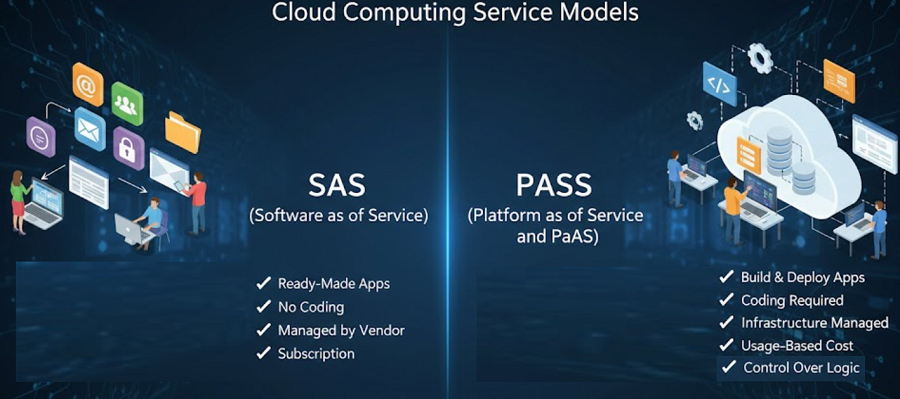
This table alone clears up many misconceptions about SaaS and PaaS differences.
SaaS vs PaaS Use Cases (Real Decisions People Make)
Still unsure When to use SaaS vs PaaS? Use cases often make the answer obvious.
SaaS Works Best When:
- You need fast deployment
- You don’t want development overhead
- You prefer predictable costs
PaaS Works Best When:
- You’re building custom applications
- You need scalability without infrastructure headaches
- Your team includes developers
These SaaS vs PaaS use cases are common across startups, enterprises, and even solo founders.
Difference Between SaaS And PaaS for Startups and Teams
For early-stage companies, the Difference Between SaaS And PaaS can affect budgets, timelines, and even survival.
SaaS vs PaaS for Startups
| Startup Need | SaaS Fit | PaaS Fit |
|---|---|---|
| Speed to market | Excellent | Moderate |
| Budget control | Predictable | Variable |
| Custom product logic | Limited | Strong |
| Internal dev team | Not required | Required |
| Scaling users | Easy | Easy but configurable |
This is why SaaS vs PaaS for startups isn’t a debate—it’s a strategic choice.
SaaS vs PaaS Pricing Models Explained Simply
Pricing often seals the deal.
SaaS vs PaaS pricing models differ in how costs scale:
- SaaS usually charges per user or per feature
- PaaS charges based on usage—compute time, storage, and bandwidth
Pricing and Cost Control Comparison
| Pricing Factor | SaaS | PaaS |
|---|---|---|
| Billing Style | Subscription-based | Usage-based |
| Cost Predictability | High | Medium |
| Scaling Costs | Linear | Variable |
| Hidden Costs | Rare | Possible if unmanaged |
If you value stable monthly expenses, SaaS often feels safer. PaaS rewards efficiency but punishes waste.
Benefits of SaaS and PaaS (Why Both Exist)
It’s easy to frame this as a competition, but both models thrive because they solve different problems.
Benefits of SaaS and PaaS Side by Side
- SaaS benefits include speed, simplicity, and low maintenance
- PaaS benefits include flexibility, control, and innovation speed
A mature tech stack often uses both—SaaS for operations, PaaS for products.
Limitations of SaaS and PaaS (The Honest Trade-offs)
Nothing is perfect. Understanding the limitations of SaaS and PaaS prevents bad decisions.
SaaS limitations:
- Limited customization
- Vendor lock-in
- Less control over data flow
PaaS limitations:
- Requires skilled developers
- Cost unpredictability
- Platform dependency
This is where a managed cloud services comparison can help businesses balance risk and control.
SaaS and PaaS Real-World Examples (How Companies Mix Both)
In practice, most companies don’t choose one forever. They mix them.
A business might:
- Use SaaS tools for HR, marketing, and accounting
- Use PaaS for building customer-facing products
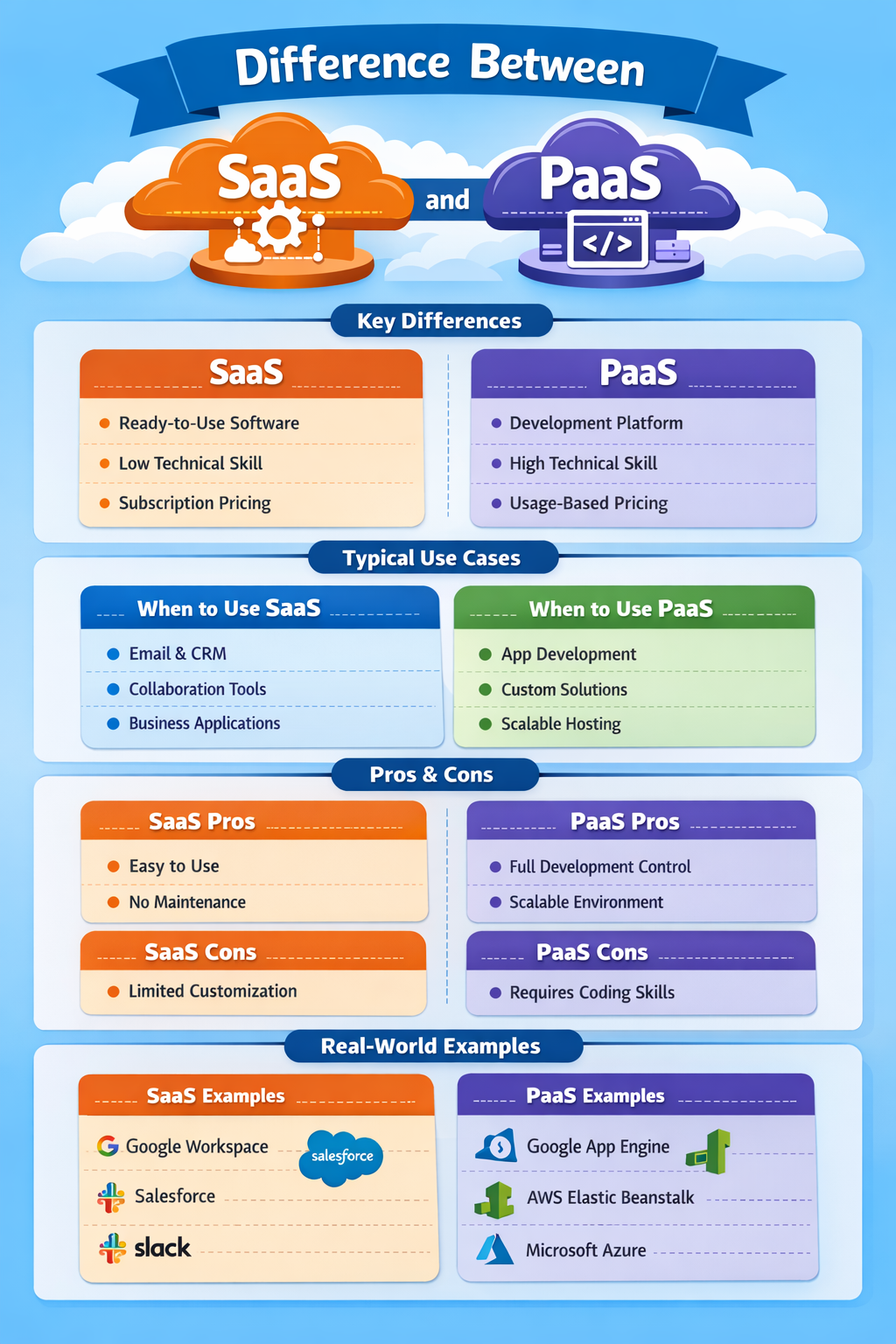
These SaaS and PaaS real-world examples show that cloud maturity isn’t about picking sides—it’s about smart layering.
Final Thoughts: Difference Between SaaS And PaaS in Plain Terms
So, Which is better SaaS or PaaS?
The honest answer: neither—and both.
The Difference Between SaaS And PaaS comes down to intent. If you want convenience, SaaS wins. If you want creation, PaaS dominates. Many modern businesses rely on both to stay competitive, agile, and scalable.
Understanding this difference isn’t just technical knowledge—it’s strategic clarity.
FAQ: Quick Answers People Actually Ask
Q1. What is the main Difference Between SaaS And PaaS?
SaaS provides ready-to-use software, while PaaS provides a platform to build software.
Q2. When should a business choose SaaS over PaaS?
Choose SaaS when you want fast deployment with minimal technical involvement.
Q3. Is PaaS better for developers?
Yes. PaaS is specifically designed for application development and deployment.
Q4. Can companies use both SaaS and PaaS together?
Absolutely. Many businesses use SaaS for operations and PaaS for product development.
Q5. Are SaaS and PaaS secure?
Both can be secure when used correctly, especially with proper configuration and access controls.