Affiliate Marketing for Tech Bloggers. The tech landscape is vast, ever-changing, and populated by an audience constantly hungry for the latest reviews, tutorials, and insights. For a tech blogger, this presents a golden opportunity not just to inform, but to monetize. Affiliate Marketing for Tech Bloggers is not merely an income stream; it’s a strategic partnership that leverages your authority to recommend valuable products and services to a highly engaged audience.
This detailed guide will walk you through building a high-converting affiliate strategy, from selecting the most lucrative programs to mastering SEO and content creation.
The Ultimate Guide to Affiliate Marketing for Tech Bloggers
1. The Foundation: Choosing Profitable Tech Niches and Programs
Successful affiliate marketing begins with a deep understanding of your niche and audience. In the technology space, this often means moving beyond general electronics to highly specialized areas.
Identifying High-Converting Programs
The power of Affiliate Marketing for Tech Bloggers lies in promoting products with high value and high commission rates. Focus on the best tech affiliate programs that offer significant earning potential. This usually means looking beyond physical gadget review affiliate programs (like those for phones or cameras) and towards digital products affiliate marketing.
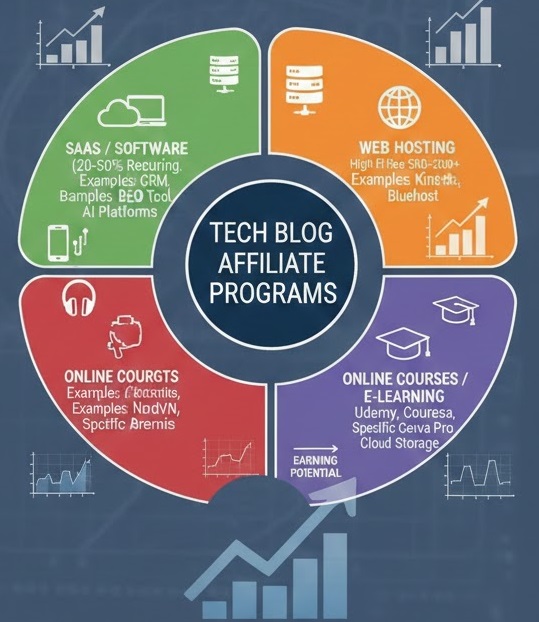
- Software and SaaS: This is arguably the most lucrative area. Promoting subscriptions offers the chance for recurring commissions, a cornerstone of long-term passive income. Look for software affiliate programs for bloggers that target essential tools your audience needs.
- Web Hosting and Infrastructure: Every website needs a reliable host. Hosting affiliate programs for bloggers, such as those from SiteGround or Kinsta, are foundational and often pay high one-time commissions.
- Specialized Digital Tools: Consider platforms related to VPNs, cybersecurity, productivity apps, or graphic design tools like Canva. The rise of machine learning makes AI tools affiliate programs a particularly hot and relevant niche right now.
The table below compares the typical earning potential across different tech product categories:
| Product Category | Commission Structure | Typical Earnings Potential | Best for Blogs Covering… |
| SaaS & Software | Recurring (20-50%) or High Flat Fee | High & Consistent Passive Income | Digital Marketing, Productivity, Coding |
| Hosting | High One-Time Fee ($50-$200+) | High Initial Payouts | Web Development, WordPress, Small Business Tech |
| Physical Gadgets | Low Percentage (1-5%) | Low-to-Moderate, High Volume Needed | Product Reviews, Unboxing, Lifestyle Tech |
| Online Courses | High Percentage (20-75%) | Moderate-to-High, Skill-Based | Career Tech, Programming Languages, Certifications |
Targeting High-Paying Tech Affiliate Networks
For maximum profitability, you need to join high paying tech affiliate networks and direct-partner programs. Many top-tier software companies run their own programs, often offering better rates than general networks. This focus on premium, specific products defines successful affiliate marketing for technology blogs. A key strategy here is targeting niche, high-value offerings; for example, promoting an advanced analytics tool over a generic office suite.
2. Strategic SEO and Content for High Conversions
Generating traffic is only half the battle; converting that traffic into sales is what makes Affiliate Marketing for Tech Bloggers truly successful. This requires a laser focus on content quality and search engine optimization (SEO).
Writing for ‘Buyer Intent’
Your content must answer a user’s query while subtly guiding them toward a solution—the affiliate product. Use keywords that signal a strong “buyer intent.” For instance, instead of just writing about “SEO tools,” target phrases like “Semrush vs Ahrefs comparison” or “best WordPress hosting affiliate programs for bloggers.”
Great content for affiliates includes:
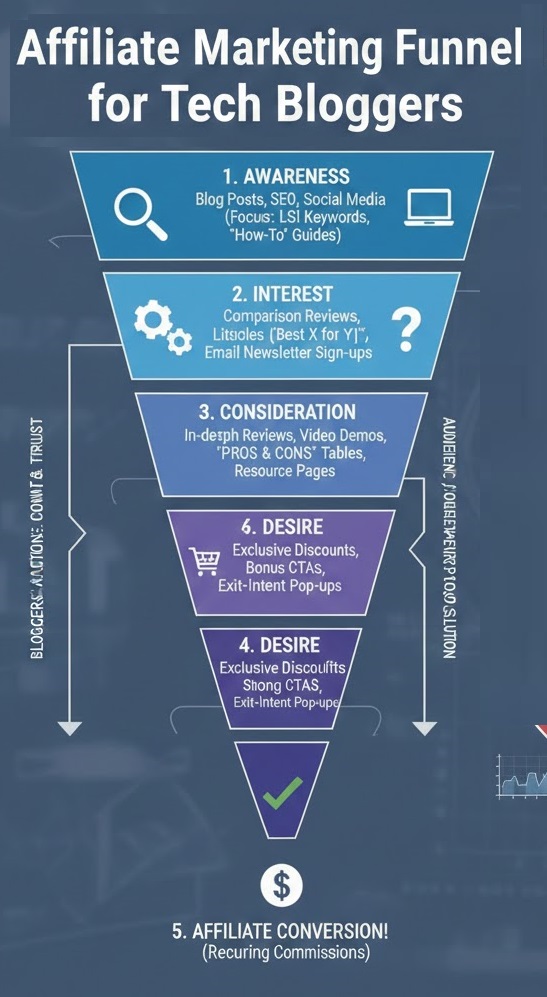
- In-Depth Reviews: Providing detailed, hands-on experience demonstrates authority.
- Comparison Posts: Directly contrasting two or more products (e.g., “AI Writing Tool A vs. AI Writing Tool B”) is an excellent conversion format.
- Tutorials/How-To Guides: Show users exactly how an affiliate product solves their problem. Integrating affiliate links for tech reviewers naturally within a step-by-step tutorial is highly effective.
Mastering On-Page SEO and LSI Keywords
To rank well, your article needs to signal to Google that it is the most comprehensive and relevant resource on the topic. The focus keyword, Affiliate Marketing for Tech Bloggers, should appear naturally in your title, subheadings, and body.
Crucially, you must strategically weave in LSI keywords (Latent Semantic Indexing) to establish topical depth. For example, when discussing SaaS tools, you should include terms like SaaS affiliate programs high commission, software affiliate programs for bloggers, or digital products affiliate marketing. This helps search engines understand the full context of your article, boosting your ranking potential.
| LSI Keyword Focus Area | Example LSI Keywords to Integrate | Content Context |
| Affiliate Programs | best tech affiliate programs, high paying tech affiliate networks, affiliate programs for tech influencers | Sections listing specific programs or comparing networks like Impact/ShareASale. |
| Monetization Strategy | how to monetize a tech blog, tech niche affiliate marketing, affiliate marketing strategies for tech blogs | Sections discussing content types, traffic generation, or long-term growth. |
| Product Types | software affiliate programs for bloggers, gadget review affiliate programs, AI tools affiliate programs | Review and comparison posts of specific product types. |
3. Scaling Your Income with High-Value Products
To truly scale, you need to look at tech niche affiliate marketing that targets the higher end of the customer value chain.
Leveraging SaaS and Recurring Commission
The holy grail of Affiliate Marketing for Tech Bloggers is the recurring commission model, commonly found in SaaS affiliate programs high commission offerings. A single referral for a high-end software subscription can pay out month after month, year after year. This dramatically shifts your income from transactional to passive. Promoting a tool like a premium CRM, a comprehensive SEO platform (like Semrush), or an advanced cloud service means you get paid as long as the customer remains a paying user.
The Power of AI Tools Affiliate Programs
The rise of generative AI has created a new, high-growth sector. Promoting AI tools affiliate programs offers a chance to capitalize on current trends. Tools for automated coding, content generation, image editing, or advanced data analysis are in high demand across the tech and business world. Your audience of tech enthusiasts and professionals is the perfect demographic for these cutting-edge digital products affiliate marketing opportunities.
Authenticity: The Core of High Conversions
No amount of SEO can replace genuine trust. For affiliate marketing for technology blogs to work, your audience must believe your recommendations. This means:
- Honest Reviews: Only promote products you have genuinely used and believe in. Disclose both pros and cons.
- Clear Disclosures: Always include a clear and conspicuous disclosure that you are using affiliate links for tech reviewers and may earn a commission. This is legally required and builds immense trust.
- Audience First: Your primary goal is to help your readers solve a problem—the commission is a secondary reward for providing value.
By focusing on these strategies, you can transform your blog from a hobby into a significant revenue engine. Remember, the journey to successfully monetize a tech blog through this method is a marathon, not a sprint, built on trust, quality content, and strategic program selection.
4. Advanced Affiliate Marketing Strategies for Tech Blogs
Once you have the foundation, it’s time to refine your approach. This includes diversifying your channels and mastering conversion rate optimization (CRO).
Beyond the Blog Post
While blog posts are essential for SEO, successful affiliate marketing for tech bloggers involves using multiple touchpoints:
- Email Marketing: Your email list is a highly engaged audience segment. Use personalized email sequences to share your best guides and carefully introduce affiliate products.
- Video Content: A dedicated tech influencer promoting a product on YouTube with a link in the description is an incredibly powerful conversion tool. This works well for gadget review affiliate programs where visual demonstration is key.
- Resource Pages: Create a dedicated “Recommended Tools” page listing the best tech affiliate programs you use daily. This is a one-stop-shop for readers actively looking to buy.
Actionable Conversion Rate Optimization (CRO)
To maximize earnings, you must optimize where and how you place your affiliate links for tech reviewers:
| Element | Placement Strategy | Reason for Effectiveness |
| Link Buttons | Use large, brightly colored Call-to-Action (CTA) buttons. | High visual impact, clearly signals the intended action (clicking/buying). |
| Early Links | Place your first link high up in the content (within the first 2-3 paragraphs). | Captures readers with high intent who don’t need to read the full review. |
| Comparison Tables | Use comparison tables with a final CTA link in the last column. | Allows for quick scanning and side-by-side decision making (see table 2 above). |
| Exit-Intent Popups | Offer a discount code or bonus for the affiliate product as a user is about to leave. | Recaptures lost traffic with a final, compelling offer. |
By continually testing and optimizing these conversion points, you ensure that the effort you put into traffic generation translates into maximum revenue. This disciplined approach is the secret sauce for those looking at how to monetize a tech blog effectively, making affiliate marketing for technology blogs a robust, long-term business model.
Frequently Asked Questions (FAQ) about Affiliate Marketing
Q: Which are the best affiliate programs for beginners in the tech niche?
A: For those just starting, Amazon Associates (for physical goods) is easy to join, but for better commissions, look into mid-tier hosting like Hostinger or general software affiliate programs for bloggers like NordVPN or Surfshark, which often have generous commissions and are highly relevant to a tech audience. Focusing on the best affiliate programs for beginners in the SaaS category can quickly build recurring revenue.
Q: Is it better to join a network or a direct program?
A: Both! Networks like ShareASale or CJ Affiliate are great for finding a variety of products in one place, while direct programs (like those for HubSpot or a high-end VPN) often offer higher commission rates and better support. It’s smart to have a mix, but always prioritize the high paying tech affiliate networks that align with your content.
Q: How long does it take to start earning significant income?
A: This depends heavily on your traffic and authority. For a new blog, it can take 6-12 months of consistent, high-quality content creation and SEO work before you see consistent sales. The key is establishing topical authority, focusing on valuable keywords, and demonstrating expertise (E-E-A-T) as per Google’s guidelines. Consistency is the most important of all affiliate marketing strategies for tech blogs.