How To Create And Sell AI Chatbot. In today’s hyper-digital world, businesses are constantly seeking innovative ways to enhance customer engagement, streamline operations, and drive growth. Enter AI chatbots – intelligent conversational agents that are rapidly becoming indispensable across industries. Far from being a futuristic concept, AI automation and conversational AI are now accessible technologies, opening a lucrative avenue for entrepreneurs and developers. If you’ve ever wondered How To Create And Sell AI Chatbots effectively, this comprehensive guide will walk you through every step, from conception to monetization.
How to Make a Custom AI Chatbot Without Coding
The Rise of Conversational AI: Why Chatbots Are in High Demand
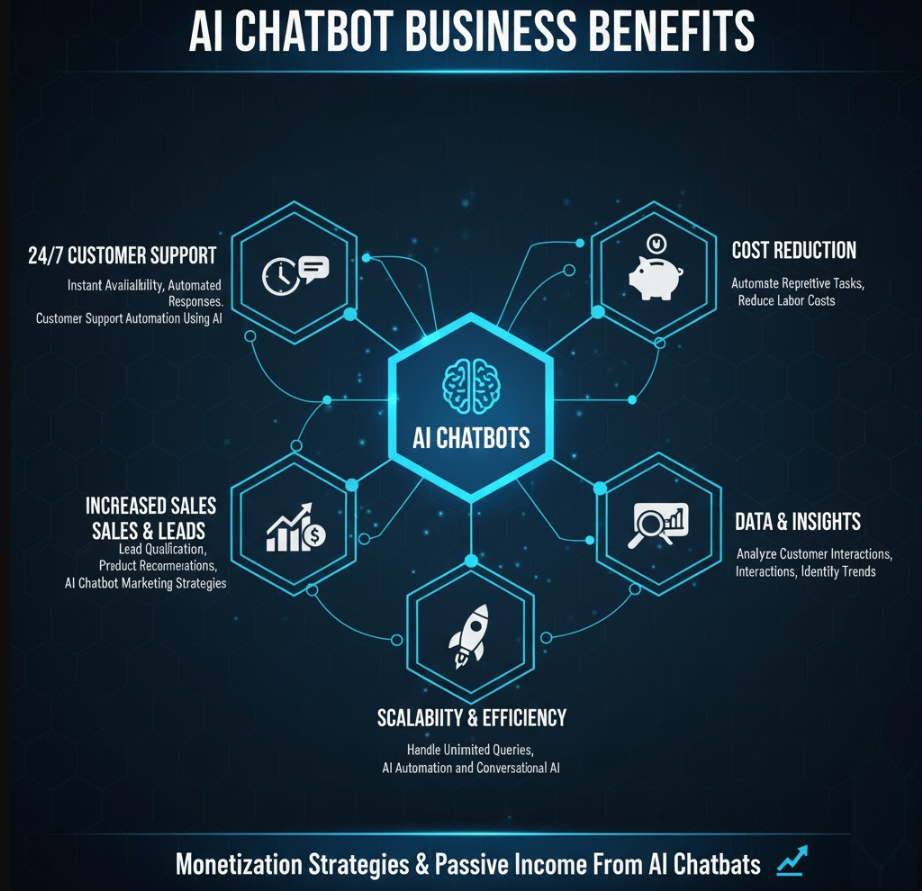
The demand for AI chatbots has surged, driven by consumer expectations for instant service and businesses’ need for efficiency. From lead generation and sales support to customer support automation using AI, chatbots offer a scalable solution that works 24/7. They provide immediate responses, personalize interactions, and free up human agents for more complex tasks. This shift has created a significant market for individuals and agencies looking to sell AI chatbot services to a diverse clientele. Understanding this demand is the first step in learning How To Create And Sell AI Chatbots.
Consider the sheer volume of online interactions. Every day, millions of customers seek information, support, or make purchases. Manual handling of these queries is expensive and often inefficient. This is where AI chatbots shine, making them a crucial tool for any modern business.

How To Create And Sell AI Chatbot – Your Comprehensive Guide to a Lucrative AI Venture
Section 1: Laying the Foundation – Planning Your AI Chatbot Venture
Before diving into the technicalities of How to make an AI chatbot from scratch, thorough planning is paramount. This initial phase defines your chatbot’s purpose, target audience, and the problems it will solve.
1.1 Identifying Your Niche and Target Market
Who needs a chatbot? Virtually every business that interacts with customers online. However, focusing on a specific niche can give you a competitive edge. Do you want to build chatbots for e-commerce, healthcare, real estate, or perhaps for small local businesses? Each sector has unique pain points that an AI chatbot can address. For instance, how businesses use AI chatbots for customer service varies greatly between an online retailer and a medical clinic.
- E-commerce: Automating product inquiries, order tracking, returns.
- Healthcare: Answering FAQs, appointment scheduling, symptom checkers.
- Real Estate: Qualifying leads, scheduling property viewings, providing property details.
- Small Businesses: Handling general inquiries, booking services, providing business hours.
1.2 Defining Your Chatbot’s Purpose and Core Functionality
What will your chatbot do? This question is central to the AI chatbot development guide. Will it primarily answer frequently asked questions, qualify leads, schedule appointments, or facilitate sales? A clear purpose ensures your development efforts are focused. A chatbot designed for customer support automation using AI will have different features than one focused on marketing.
Table 1: Chatbot Types and Their Core Functions
| Chatbot Type | Primary Goal | Key Capabilities | Best For |
| Customer Service | Enhance support, reduce load | FAQ answering, ticket creation, live chat handover, issue resolution | E-commerce, SaaS, Service Industries |
| Lead Generation | Capture and qualify prospects | Ask qualifying questions, collect contact info, schedule demos/calls | B2B, Agencies, Real Estate |
| Sales & Marketing | Drive conversions, promote products | Product recommendations, upselling, cross-selling, promotional offers | Retail, Hospitality, Online Courses |
| Informational | Provide quick access to data | Knowledge base access, data retrieval, event information | Education, Public Sector, Internal HR |
Section 2: Building Your AI Chatbot – From Concept to Creation
Now that you have a clear plan, it’s time to learn How to make an AI chatbot from scratch. The good news is that advancements in conversational AI have made this process more accessible than ever, even for those without extensive coding backgrounds.
2.1 Choosing the Best Platforms to Build AI Chatbots
The market offers a wide array of platforms, each with its strengths. Your choice will depend on your technical skill level, budget, and the complexity of the chatbot you intend to build.
- No-Code/Low-Code Platforms: Ideal for beginners and rapid prototyping. These platforms often use drag-and-drop interfaces.
- Developer-Centric Frameworks: Offer maximum flexibility and customization but require coding skills.
Some of the best platforms to build AI chatbots include:
- Dialogflow (Google): Powerful NLU, great for complex conversational flows.
- Botpress: Open-source, offers extensive customization and self-hosting options.
- ManyChat/Chatfuel: Excellent for Facebook Messenger marketing and simple flows.
- Custom Frameworks (e.g., Python with NLTK/SpaCy): For highly specialized, deeply integrated solutions.
For those interested in leveraging cutting-edge language models, ChatGPT-based chatbot creation is a highly effective approach. Tools built on large language models (LLMs) like OpenAI’s GPT series can generate remarkably human-like text and understand complex queries, enabling you to build and monetize AI chatbots with sophisticated conversational abilities.
2.2 Designing the Conversational Flow and Training Data
This is the heart of AI chatbot development guide. A well-designed conversational flow anticipates user questions and guides them smoothly towards a solution.
- User Intent: What are users trying to achieve? Map out common intents (e.g., “check order status,” “book an appointment”).
- Entities: Identify key pieces of information the chatbot needs to extract (e.g., order number, date, product name).
- Responses: Craft clear, concise, and helpful responses for each intent.
- Error Handling: What happens if the chatbot doesn’t understand? Provide graceful fallback options.
Training your chatbot involves feeding it example phrases for each intent. The more diverse and realistic your training data, the better your chatbot will understand natural language variations. This is critical for achieving successful AI automation and conversational AI.
Table 2: Key Components of Chatbot Development
| Component | Description | Importance for User Experience |
| Intent Recognition | Identifying user’s goal (e.g., “I want to return an item”) | Crucial for understanding requests and providing relevant responses. |
| Entity Extraction | Pulling out specific data points (e.g., “item name,” “order ID”) | Enables personalized actions and data collection within the conversation. |
| Dialog Management | Maintaining context, guiding the conversation flow | Ensures smooth, logical interactions and prevents repetitive questioning. |
| Integration Points | Connecting with CRMs, databases, APIs | Allows the chatbot to perform actions (e.g., check stock, update records). |
| Human Handoff | Seamless transfer to a live agent when needed | Provides a safety net for complex issues, improving overall satisfaction. |
Section 3: Monetizing Your Creation – How To Create And Sell AI Chatbots
Building a fantastic chatbot is only half the battle; the other half is successfully selling it. This section focuses on the business aspect of How to make money selling AI chatbots.
3.3 Developing Your Service Offering and Pricing Strategy
You’re not just selling a chatbot; you’re selling a solution to a business problem. Package your services to highlight the value.
- Basic Chatbot: FAQ answering, lead qualification.
- Advanced Chatbot: Integration with CRM, payment processing, live chat handover.
- Maintenance & Updates: Ongoing support, performance monitoring, training data refinement.
When determining pricing, consider the complexity of the chatbot, the value it brings to the client (e.g., saved labor costs, increased sales), and your operational expenses. You can charge one-time setup fees, monthly subscriptions, or a combination. The goal is to build and monetize AI chatbots sustainably.
3.4 Marketing and Selling Your AI Chatbot Services
Effective marketing is key to finding clients. This is where AI chatbot marketing strategies come into play.
- Showcase Your Portfolio: Build demo chatbots for different industries to illustrate capabilities.
- Content Marketing: Write blog posts, create videos, or host webinars explaining the benefits of AI chatbots. Highlight how your solutions can drive customer support automation using AI or enhance AI automation and conversational AI.
- Partnerships: Collaborate with digital marketing agencies, web developers, or business consultants who can refer clients.
- Cold Outreach: Identify businesses that could significantly benefit from a chatbot and present a tailored proposal.
- Online Marketplaces: Explore platforms where businesses seek digital solutions. Learning How to sell chatbot services online effectively means leveraging multiple channels.
When presenting to potential clients, focus on quantifiable benefits: reduction in support costs, increase in lead conversion rates, improved customer satisfaction scores. Emphasize how your chatbot solves their specific business challenges.
Table 3: Monetization Strategies for AI Chatbots
| Strategy | Description | Pros | Cons |
| Service Model (B2B) | Develop custom chatbots for businesses, charging for setup, maintenance, and features. | High revenue per client, builds long-term relationships. | Requires active client acquisition, higher service commitment. |
| SaaS Model (Platform) | Create a platform where businesses can build/deploy their own chatbots, paying a subscription. | Scalable, passive income from AI chatbots potential. | High initial development cost, intense marketing required. |
| Templates/Add-ons | Sell pre-built chatbot templates or specialized integrations/modules. | Lower entry barrier for buyers, good for recurring sales. | Limited customization for clients, requires ongoing updates. |
| Consulting/Training | Offer expertise in chatbot strategy, design, and deployment without building the bot yourself. | Leverage knowledge, lower technical overhead. | Less direct product ownership, relies on reputation. |
Section 4: Post-Launch: Optimization and Scaling Your AI Chatbot Business
Launching your chatbot is not the end; it’s the beginning of a continuous optimization cycle. This is vital for sustaining your venture once you build and monetize AI chatbots.
4.1 Continuous Improvement and Maintenance
Chatbots are living entities that require ongoing care. Monitor their performance, analyze conversations, and identify areas for improvement.
- Conversation Logs: Review missed intents or frustrating interactions.
- User Feedback: Solicit input from end-users.
- Training Data Updates: Continuously feed new examples to your chatbot’s natural language understanding (NLU) model.
- Feature Expansion: Add new capabilities as client needs evolve.
This iterative process ensures your chatbots remain effective and relevant, reinforcing the value you provide and securing recurring revenue if you sell AI chatbot services.
4.2 Scaling Your Operations and Offering Passive Income from AI Chatbots
Once you’ve mastered How To Create And Sell AI Chatbots for a few clients, think about scaling. This might involve building a team, standardizing your development process, or even creating your own white-label chatbot platform that other businesses can use. Exploring opportunities for passive income from AI chatbots, such as a SaaS model or selling templates, can provide significant long-term growth.
For example, by creating highly effective chatbots for customer support automation using AI in a specific industry, you can package that solution as a template or a specialized service, reducing development time for subsequent clients and increasing your profit margins.
Conclusion: Mastering How To Create And Sell AI Chatbots
The journey to How To Create And Sell AI Chatbots is an exciting one, full of potential for innovation and financial reward. By understanding market demand, leveraging the best platforms to build AI chatbots, meticulously designing conversational flows, and implementing robust AI chatbot marketing strategies, you can carve out a significant niche in the rapidly expanding world of AI automation and conversational AI. Whether your goal is to offer specialized services or generate passive income from AI chatbots, the foundation for success lies in delivering valuable, well-optimized, and continuously improved solutions that empower businesses to better serve their customers.
Frequently Asked Questions About Creating and Selling AI Chatbots
Q1: Do I need strong coding skills to create an AI chatbot?
A1: Not necessarily. While coding is beneficial for advanced customization, many excellent no-code and low-code platforms (like ManyChat, Flow XO, and even some aspects of Dialogflow) allow you to make an AI chatbot from scratch with minimal to no coding. For more complex or ChatGPT-based chatbot creation, some technical understanding will be helpful.
Q2: What is the average cost to build and sell AI chatbots?
A2: The cost varies widely. For simple chatbots using a no-code platform, it could be relatively low (platform subscription + your time). For complex, custom-built enterprise solutions, development costs could range from thousands to tens of thousands of dollars, depending on integrations, AI complexity, and specialized features. Your pricing to clients should reflect this investment and the value provided.
Q3: How long does it take to develop a functional AI chatbot?
A3: A basic FAQ chatbot can be built in a few days to a week using no-code tools. A more sophisticated chatbot with multiple intents, integrations, and extensive training data might take several weeks to a few months. The key is to start small, launch, and iterate.
Q4: Can I really make a passive income from AI chatbots?
A4: Yes, it’s possible, but it usually requires upfront work. Developing a white-label platform, creating highly effective pre-built templates for specific niches, or offering subscriptions for your own chatbot-as-a-service are ways to achieve passive income from AI chatbots. This often shifts from a direct service model to a product-based one.
Q5: What are the biggest challenges when selling AI chatbot services?
A5: Common challenges include educating potential clients about the value of AI chatbots (especially small businesses), demonstrating ROI, overcoming skepticism about AI capabilities, and competing in a growing market. Highlighting case studies and quantifiable results of customer support automation using AI can help overcome these hurdles.