What is Neuromorphic Engineering and Why It Matters. As technology advances, researchers are constantly looking for ways to make computing faster, more energy-efficient, and closer to human intelligence. One of the most exciting fields that bridges neuroscience and computer science is neuromorphic engineering. Often referred to as brain-inspired computing, this discipline focuses on creating hardware and software that mimic the way biological brains process information.
In this article, we’ll explore what is neuromorphic engineering and why it matters, how it compares with traditional computing, the role of neuromorphic chips in AI research, real-world applications, and the future of neuromorphic engineering.
What is Neuromorphic Engineering?
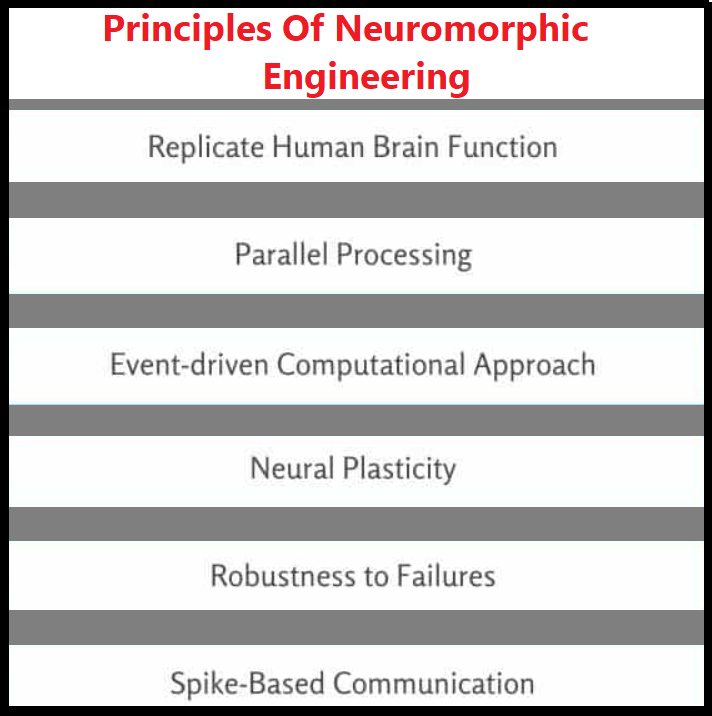
Neuromorphic engineering is a multidisciplinary field that combines neuroscience, electrical engineering, and computer science to design circuits, chips, and systems that work like the human brain. The goal is to replicate neural structures using specialized hardware that can process data through spiking neural networks (SNNs), much like how neurons and synapses operate.
Unlike conventional computing, which relies on binary logic, neuromorphic systems are designed for parallel processing, adaptability, and energy efficiency. This makes them highly suitable for tasks that require real-time learning and pattern recognition.
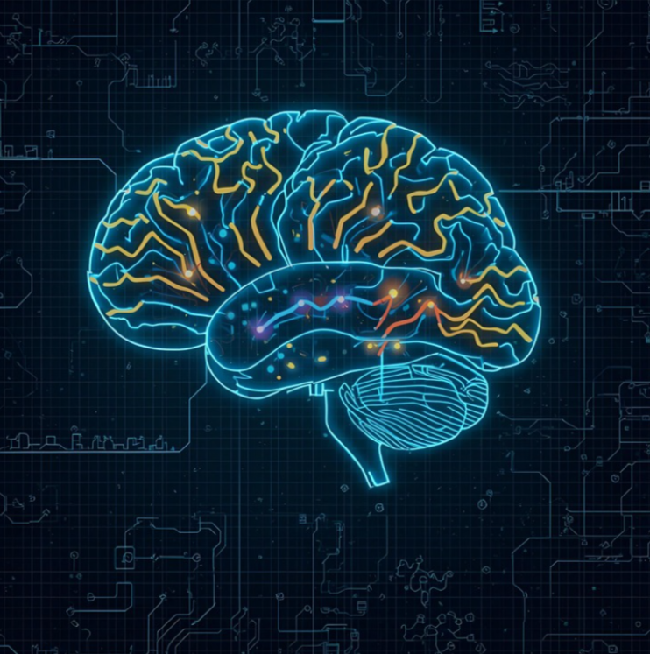
Neuromorphic Computing Explained:
To fully understand neuromorphic engineering, it’s important to grasp the concept of neuromorphic computing.
Neuromorphic computing explained simply: It’s a type of computing inspired by how neurons and synapses in the brain transmit information. Instead of step-by-step execution like traditional CPUs, neuromorphic chips process data asynchronously and in parallel.
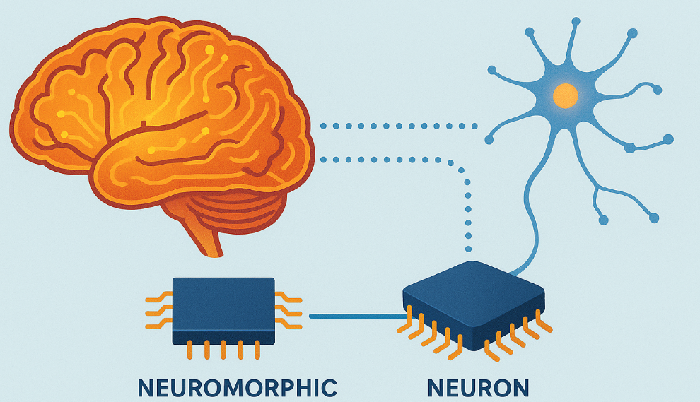
This approach allows them to consume less power and handle complex AI workloads more efficiently.
Neuromorphic Engineering vs Traditional Computing:
One of the most debated topics is the comparison between neuromorphic engineering vs traditional computing. Let’s see how they differ.
Neuromorphic Engineering vs Traditional Computing:
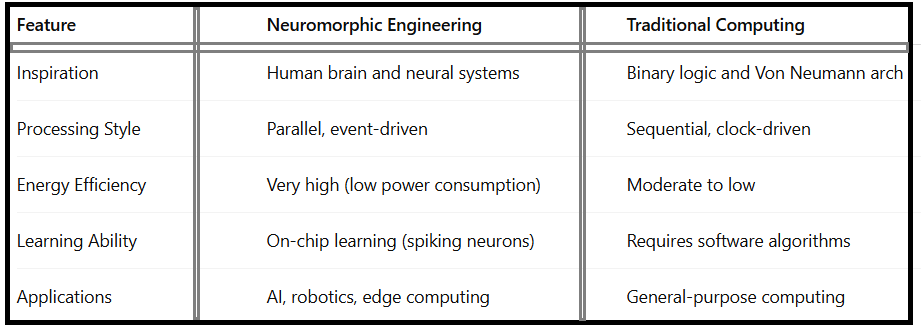
This comparison highlights why neuromorphic systems are gaining importance, especially in AI applications where traditional architectures face scalability issues.
Role of Neuromorphic Chips in AI Research:
Neuromorphic chips are central to the evolution of artificial intelligence and neuromorphic computing. Unlike GPUs and CPUs, these chips are designed to simulate how the brain processes sensory inputs like vision, sound, and touch.
Intel Loihi:
A neuromorphic processor that can adapt and learn in real-time.
IBM TrueNorth:
A chip with over a million neurons and 256 million synapses, designed for cognitive computing tasks.
SpiNNaker:
A brain-inspired supercomputer that models large-scale neural networks.
These examples prove that the role of neuromorphic chips in AI research is critical for enabling machines to learn autonomously and handle real-world complexity.
Neuromorphic Technology Applications:
Neuromorphic engineering is not just theoretical; it has practical applications across industries:
Healthcare – Brain-inspired processors can help develop advanced prosthetics, medical diagnosis systems, and neural implants.
Robotics – Robots powered by neuromorphic chips can navigate and learn from their environment more effectively.
Autonomous Vehicles – Real-time object detection and decision-making in self-driving cars.
Edge Computing – Low-power devices like IoT sensors can benefit from energy-efficient neuromorphic computing.
Defense and Aerospace – Intelligent surveillance systems and adaptive technologies for high-risk environments.
Examples of Neuromorphic Computing Applications:
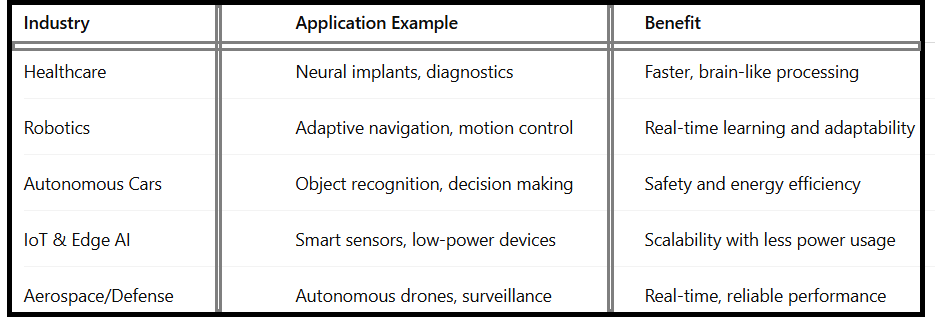
These examples highlight what is neuromorphic computing in practice and why industries are investing heavily in it.
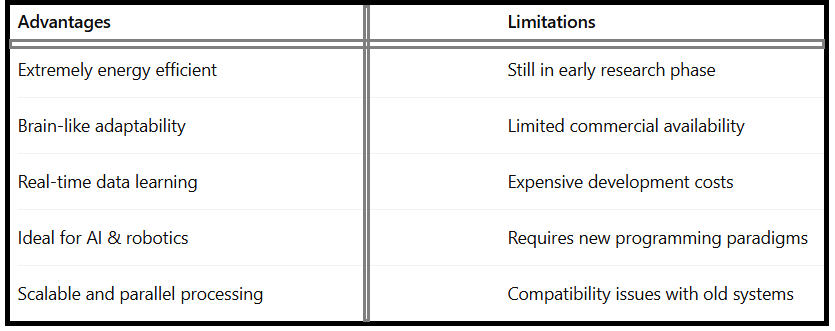
Advantages of Neuromorphic Computing:
The advantages of neuromorphic computing are significant compared to conventional systems:
Energy Efficiency:
Uses far less power compared to GPUs/CPUs.
Scalability:
Capable of handling complex, large-scale neural simulations.
Real-Time Learning:
Learns and adapts on the go, similar to biological brains.
Reduced Latency:
Processes information faster by working in parallel.
Edge AI Benefits:
Enables low-power AI in portable devices.
Advantages vs Limitations of Neuromorphic Computing:
Future of Neuromorphic Engineering:
The future of neuromorphic engineering looks promising, as industries continue to push the boundaries of next-generation computing architectures. Experts predict:
-Wider adoption in AI-powered healthcare systems.
-Smarter and safer autonomous vehicles.
-Development of general AI systems capable of learning like humans.
-Expansion into consumer electronics, making devices more adaptive and energy-friendly.
As neuromorphic hardware becomes more affordable, it may eventually replace traditional CPUs and GPUs in certain specialized tasks.
Conclusion:
Neuromorphic engineering represents a paradigm shift in how we design computers. By mimicking the brain’s architecture, it offers unparalleled energy efficiency, adaptability, and intelligence. From AI research to robotics and healthcare, the applications are vast.
Understanding what is neuromorphic engineering and why it matters helps us see the future of computing—one that is less about brute force and more about intelligence, efficiency, and sustainability.
FAQ – What is Neuromorphic Engineering and Why It Matters
Q1.What is neuromorphic engineering in simple terms?
It is the design of brain-inspired chips and systems that mimic neurons and synapses for smarter, low-power computing.
Q2.What is neuromorphic computing?
Neuromorphic computing is the use of brain-like architectures for processing information, making machines more energy-efficient and intelligent.
Q3.What are some neuromorphic computing examples?
Examples include Intel Loihi, IBM TrueNorth, and SpiNNaker supercomputer.
Q4.What are the advantages of neuromorphic computing?
Key benefits include energy efficiency, real-time learning, scalability, and adaptability.
Q5.Why does neuromorphic engineering matter?
It matters because it can revolutionize AI, healthcare, robotics, and edge computing, making systems smarter and more efficient.