Difference Between Cloud Hosting and Shared Hosting. Choosing the right hosting can feel confusing—especially when terms like cloud and shared hosting get thrown around everywhere. If you’re building a website, blog, or even an online store, understanding the Difference Between Cloud Hosting and Shared Hosting is critical.
Both are popular web hosting services, but they operate in completely different ways. One relies on shared resources, while the other uses advanced cloud infrastructure hosting for flexibility and speed.
So… which one should you pick?
In this guide, we’ll break things down in simple terms, compare performance, pricing, and features, and help you decide the best fit for your needs—whether you’re just starting out or scaling your online business hosting solutions.
What is Shared Hosting?
Shared hosting is exactly what it sounds like—you share a server with multiple websites. Think of it like renting a room in a shared apartment.
It’s one of the best hosting for beginners because it’s cheap and easy to manage. Most providers offer cheap shared hosting plans, making it attractive for bloggers and small businesses.
Shared Hosting Advantages and Disadvantages
Let’s be real—shared hosting is not perfect.
Advantages:
- Affordable pricing (great for beginners)
- Easy setup with minimal technical knowledge
- Managed environment with basic support
Disadvantages:
- Limited resources (CPU, RAM, bandwidth)
- Slower performance during traffic spikes
- Security risks due to shared environment
- Strict shared hosting limitations
If your site grows fast, you’ll quickly notice these downsides.
What is Cloud Hosting?
Cloud hosting works differently. Instead of relying on one physical server, it uses multiple interconnected servers. That means your website pulls resources from a network, not a single machine.
This is where things get interesting.
With cloud server hosting features, you get better uptime, scalability, and performance. It’s ideal for businesses needing hosting scalability and flexibility.
Benefits of Cloud Hosting
- High uptime and redundancy
- Flexible resource allocation
- Better website speed optimization hosting
- Stronger security and backups
- Ideal for growing websites
Many providers now offer managed cloud hosting services, which means you don’t even need technical expertise to run it.
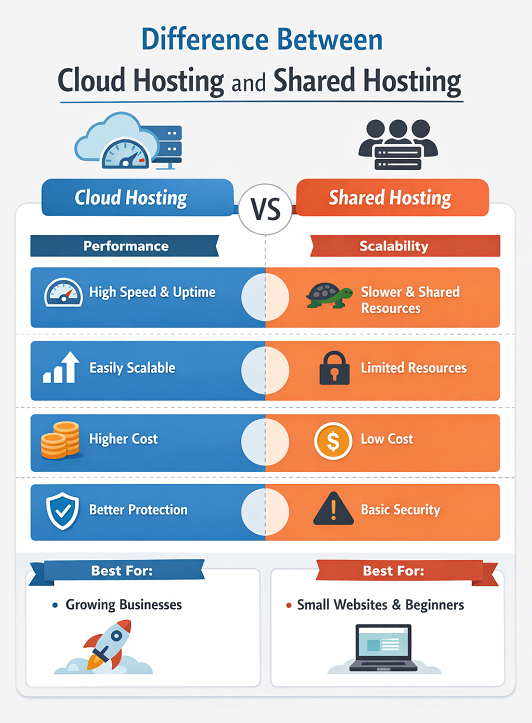
Difference Between Cloud Hosting and Shared Hosting (Quick Overview)
Before diving deeper, here’s a clear cloud hosting vs shared hosting comparison:
| Feature | Shared Hosting | Cloud Hosting |
|---|---|---|
| Resource Usage | Shared among users | Dedicated + scalable |
| Performance | Moderate | High |
| Scalability | Limited | Excellent |
| Uptime | متوسط (depends on server) | Very high |
| Cost | Low | Medium to High |
Performance: Website Hosting Performance Comparison
Performance is often the deal-breaker.
In shared hosting, your site competes with others on the same server. If one website suddenly gets traffic, yours might slow down. This directly affects website performance optimization.
Cloud hosting? Totally different story.
It distributes your workload across multiple servers. So even if traffic spikes, your site remains stable. This leads to better hosting uptime and reliability.
Performance Comparison Table
| Metric | Shared Hosting | Cloud Hosting |
|---|---|---|
| Page Load Speed | متوسط | Fast |
| Traffic Handling | Limited | High capacity |
| Downtime Risk | Higher | Minimal |
| Stability | Inconsistent | Stable |
Scalability and Flexibility
This is where cloud hosting shines.
Shared hosting has strict limits. You can’t suddenly increase RAM or bandwidth. These are common shared hosting limitations.
Cloud hosting, on the other hand, offers true scalable hosting solutions. Need more power? You can upgrade instantly.
This makes cloud hosting ideal for:
- E-commerce stores
- High-traffic blogs
- Growing startups
Pricing: Cloud Hosting Pricing vs Shared Hosting Cost
Let’s talk money.
Shared hosting wins in affordability. No debate there. If you’re on a tight budget, it’s a great starting point.
Cloud hosting is more expensive—but you pay for what you use.
Pricing Comparison Table
| Hosting Type | Average Cost | Value |
|---|---|---|
| Shared Hosting | Very Low | Good for small sites |
| Cloud Hosting | Medium to High | High performance value |
Still unsure? If you’re running a personal blog, shared hosting works. But for serious online business hosting solutions, cloud hosting is worth the investment.
Security: Hosting Security Differences
Security is often overlooked… until something goes wrong.
In shared hosting, multiple sites share the same environment. If one gets hacked, others might be affected. This highlights major hosting security differences.
Cloud hosting offers better isolation, firewalls, and automatic backups.
Security Comparison Table
| Feature | Shared Hosting | Cloud Hosting |
|---|---|---|
| Isolation | Low | High |
| Backup Options | Limited | Advanced |
| Risk Level | Higher | Lower |
Use Cases: Which One Should You Choose?
Let’s make it practical.
Choose Shared Hosting if:
- You’re just starting
- You need cheap shared hosting plans
- Your traffic is low
- You want a simple setup
Choose Cloud Hosting if:
- You need high performance
- You expect traffic growth
- You want better hosting server environment
- You need flexibility and scaling
Difference Between Cloud Hosting and Shared Hosting (Final Thoughts)
At the end of the day, the Difference Between Cloud Hosting and Shared Hosting comes down to performance, scalability, and cost.
Shared hosting is simple and affordable—but limited.
Cloud hosting is powerful and flexible—but slightly more expensive.
If you’re serious about website performance optimization and long-term growth, cloud hosting is the smarter choice. But if you’re testing ideas or launching your first site, shared hosting is perfectly fine.
FAQ (Frequently Asked Questions)
1. What is the main Difference Between Cloud Hosting and Shared Hosting?
The main difference is resource allocation. Shared hosting uses one server for many users, while cloud hosting uses multiple servers for better performance.
2. Is cloud hosting better than shared hosting?
Yes, especially for performance and scalability. However, shared hosting is better for beginners due to its low cost.
3. Which is the best hosting for beginners?
Shared hosting is usually the best hosting for beginners because it’s simple and affordable.
4. Is cloud hosting expensive?
It can be more costly than shared hosting, but the value in performance and flexibility justifies the price.
5. Can I switch from shared to cloud hosting later?
Absolutely. Many providers allow easy upgrades as your website grows.